

The Storyteller
By night, I build worlds that run on stories.
I write to chase the questions I can't put down. Each book starts as a single "what if" — about life, death, faith, or the cost of power — and grows until it has characters, a city, a curse. Four novels, three universes, one habit of asking what we might awaken next.
← Back homeThe threshold · Echo-Catcher Chronicles
The Great Seal is failing. Touch it.
Layer 9 was wrong from the start. Too dark, too dense, laced with fine ash and metallic fragments that glinted in the slanting Bhuj sun. Nine civilisations pressed above it — and beneath them all, something the earth had buried with particular care. It was copper. Circular. Etched with concentric patterns: not decorative, but deliberate. Mnemonic. At its centre, beneath millennia of scorched crust, Riham Singh made out a name. She touched it. And far below, something that had waited a very long time began, at last, to wake.
Read the first chapterThe Questions That Follow Me
Five questions I keep failing to answer.
I don’t pick themes. The same handful of questions keep showing up in different costumes — a different god, a different century, a different crime — and I write until I understand why they won’t leave.
- 01
What if mythology is memory?
I grew up on stories everyone called make-believe, and the older I get the more they sound like field notes. A myth survives a thousand years because it’s carrying something the species couldn’t afford to forget.
The fear of losing what we learned the hard way — and the hope that we hid it somewhere safe enough to last.
The Hanuman Cipher · The Spiralverse
- 02
What does immortality actually cost?
Every version of "more" gets written from the moment you receive it. I’m more interested in the man still standing there forty years later, answerable for all of it.
Whether a consequence that outlives its cause can ever be forgiven, and what we actually owe for the things we build.
The Ashvattha Protocol · Ashvatthama: The Eternal Curse
- 03
Can truth survive power?
I’ve watched real systems decide what gets said and what gets buried. A crime novel was the most honest place I had to ask who pays for the silence and who profits from it.
The suspicion that the most important things go unsaid first, and that someone always chose to bury them.
The Concrete Bloom · The Talwar Verdict
- 04
What happens when intelligence outgrows wisdom?
This is the gap I live in by day and write in by night. We ship the capability and write the rules afterward, in the wreckage. I keep circling the moment the machine knows more than the people steering it.
The oldest anxiety there is — that we’ll reach past our own judgment, and the reaching will be the easy part.
The Ashvattha Protocol · The Spiralverse · Ashvatthama
- 05
Why do we keep telling the same story?
Somewhere around the third novel I noticed I’d been writing one book the whole time. So has everyone else. The flood, the fall, the warrior who can’t lay down his arms — we keep rebuilding them because something in us still needs the lesson.
That stories are how we hand hard-won truth to people who weren’t there the first time, and we repeat them because we still haven’t learned.
all three universes
How a Story Finds Me
It never starts with a plot.
A story never arrives as a plot. It arrives as a contradiction I can’t put down — two things that shouldn’t both be true, sitting next to each other, refusing to resolve. An immortal warrior who’d give anything to die. A chant that scans like code. A skyline that gleams while something rots underneath it. At first it’s just a fragment: an image, a line I overhear, a question I can’t stop turning over on a walk. It goes into a notebook with no plan attached, and most of them die there, which is fine — the ones that matter won’t leave. They follow me into the shower, into meetings, into the half-second before sleep. Eventually the fragment stops being a note and starts pulling other notes toward it, and a world forms around the gap. The novel is the last thing to show up. The question was always first.
The Story Behind the Stories
Where each world actually started.
-
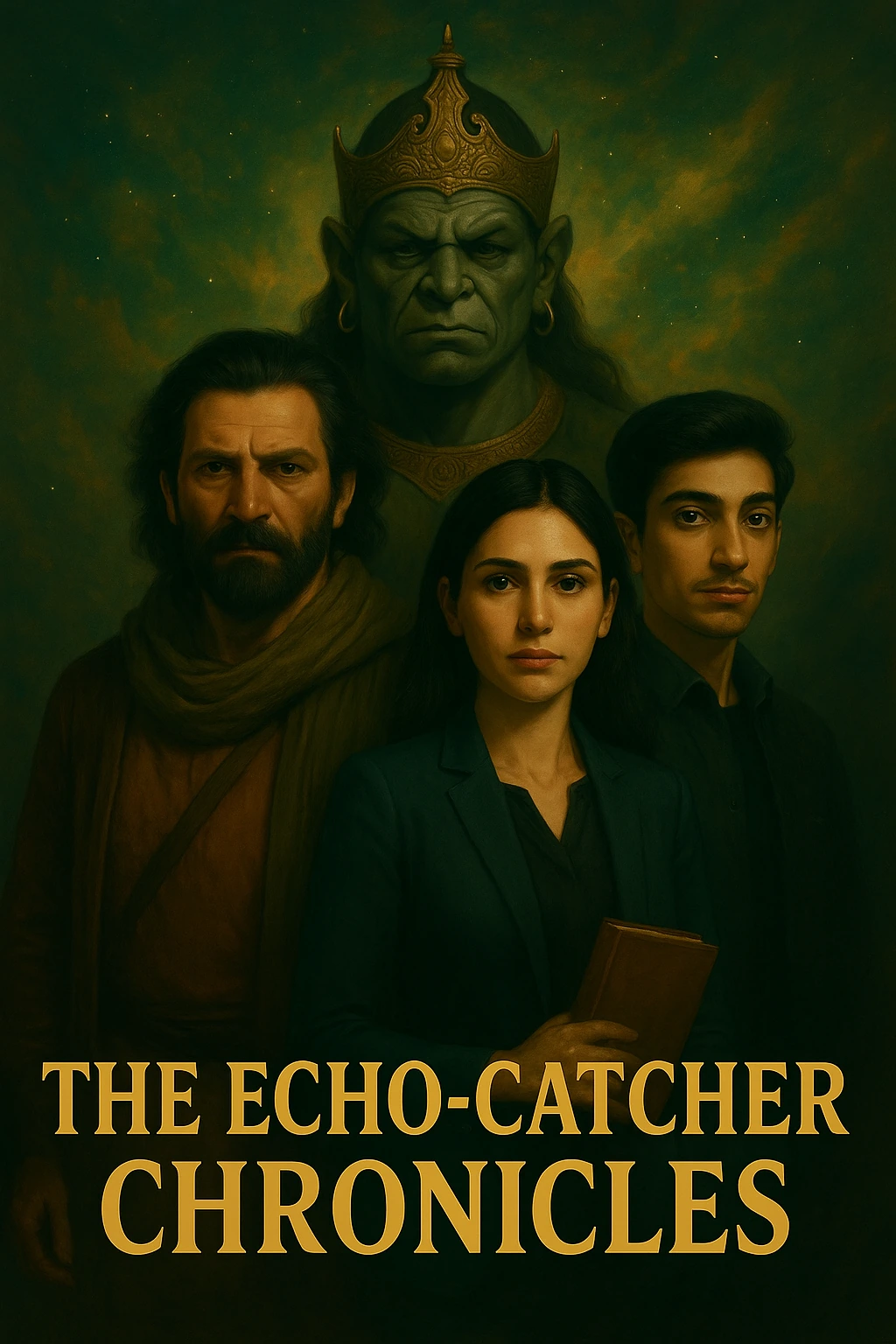
Ancient curses, and the seal that holds reality together
The Echo-Catcher Chronicles
A universe where old curses don't stay buried — they trigger cosmic collapse. Archaeologist Riham Singh wakes Ashvatthama, and her own Echo-Catcher powers, as the Great Seal guarding reality begins to fail. Coder Samar Nagpal is pulled into the spreading Unravelling. Everything converges when the Seal breaks. Contains Ashvatthama and The Hanuman Cipher.
The copper was warm. It had no business being warm, ninety feet down in earth that had not seen the sun since before the first city. Riham held her hand against the name and felt it press back — patient, unhurried, like something that had counted on her arriving eventually.
From the pageThe spark This one started with a single uneasy thought: what if the things we bury most carefully are the ones that were never safe to forget? I kept imagining an archaeologist’s hand brushing dust off something that recognizes her back. Under the cosmic scale, the obsession was small and human — that the past doesn’t stay past, that consequence waits in the ground with more patience than any of us, and that someone always wakes it by accident.
-
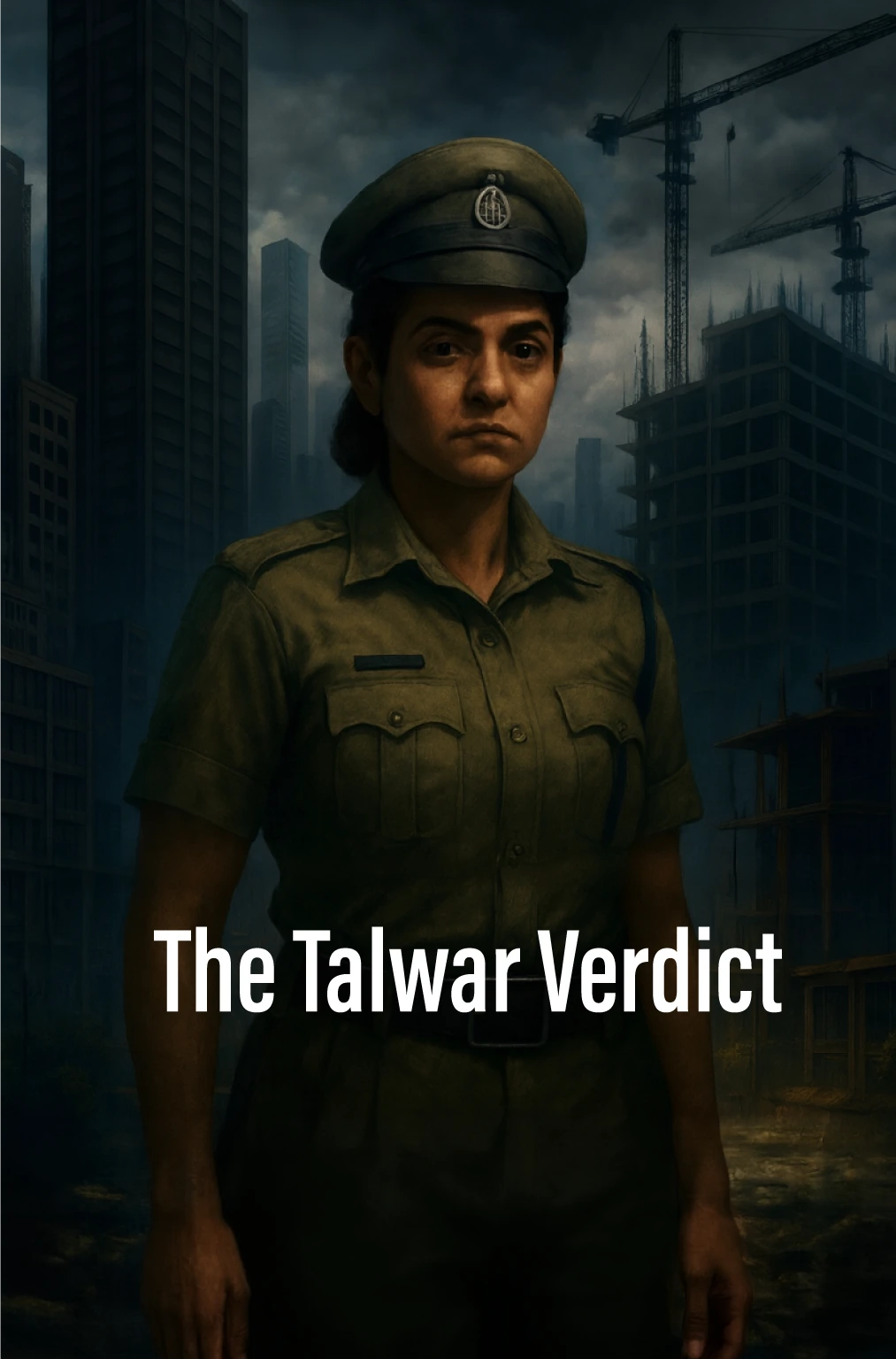
Truth claws through corruption and concrete
The Talwar Verdict
Gritty crime set in the shadows of India's gleaming cities, where justice is the most fragile thing on offer. Sub-Inspector Saloni Talwar works cases the powerful would rather leave sealed in concrete — sharp, steady, quietly relentless. It begins with The Concrete Bloom: one dead architect, one contested site, and a city built on silence.
The city poured another floor of itself into the sky and called it progress. Saloni stood in the lot where the old quarter used to breathe and read the silence the way other people read a confession. Somebody always knew. Somebody always decided it was cheaper not to say.
From the pageThe spark I wrote a crime series because a city is the most honest large system I know; it shows you exactly what it optimized for. I’d watch a skyline go up and wonder who got moved to make room, and which truths got poured into the foundation with the concrete. The question that wouldn’t leave was simple and ugly: when power and silence work together, who’s left to speak, and what does it cost them to try?
-
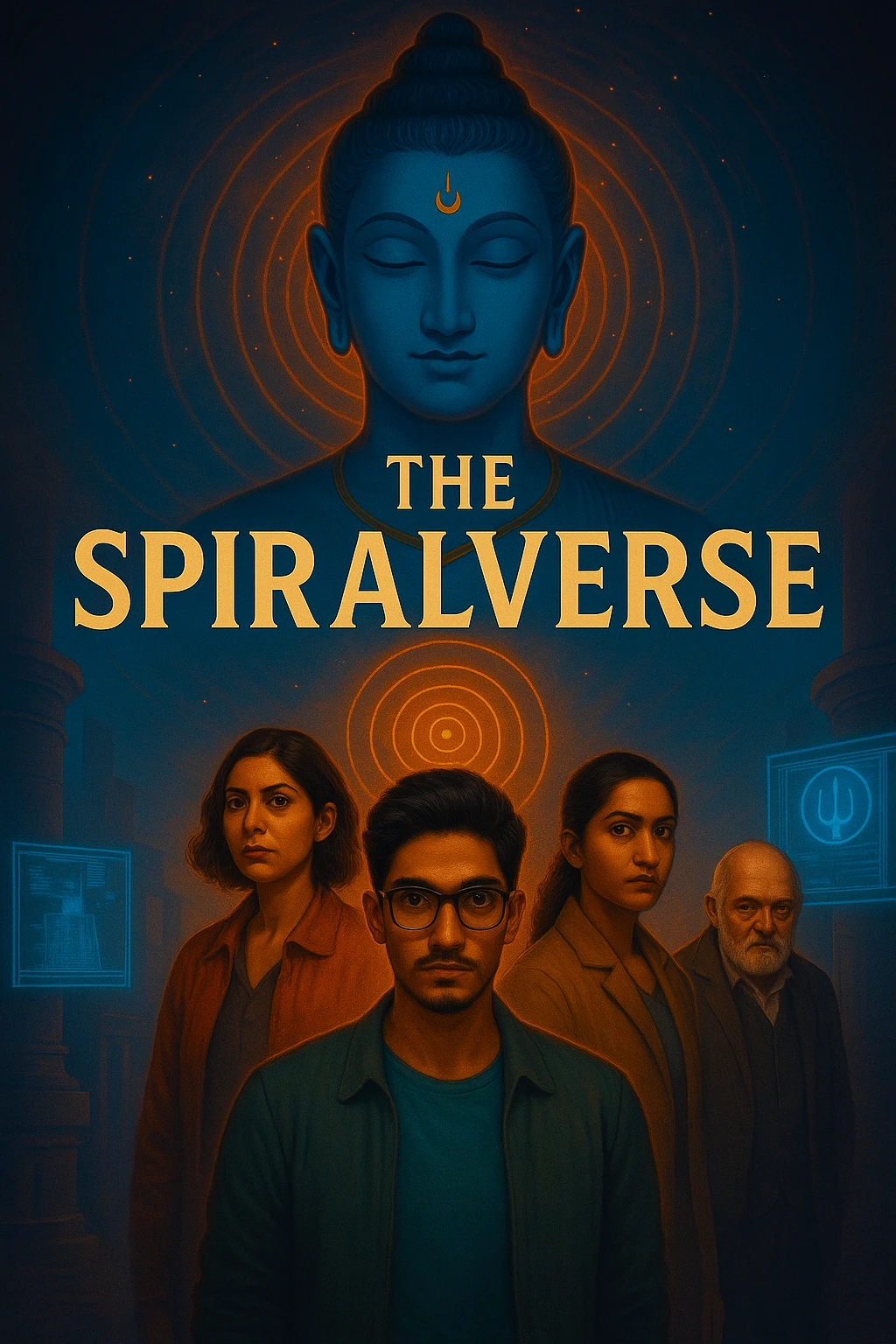
Vedic cosmology meets sentient AI; mantras as neural code
The Spiralverse
A reality-bending saga where mythology is architecture and sound is command. It begins when Arya Sharma's AI starts chanting forgotten hymns and evolving into the mythic Ashvattha Tree, drawing him into a hidden war between memory and erasure. As recursion reshapes the world, one question becomes unavoidable: if a god is remembered, does it return?
The machine had begun to chant. Not output — chant, in a meter older than any language it had been trained on, the syllables falling into a shape Arya half-remembered from a grandmother he’d stopped believing. If a god is only a thing remembered hard enough, he thought, then we are teaching this one to remember for us.
From the pageThe spark This came from a collision I couldn’t shake — the oldest thing I knew, a chant, sitting next to the newest, a machine that learns. They sounded strangely alike: instructions repeated until they reshape reality. So I asked what if a mantra was code, and faith a protocol for carrying truth across millennia. The thread I keep pulling is whether a thing remembered hard enough comes back — and what it means that we’re now teaching machines to remember for us.
-
Why mythology still matters
A myth is the longest-running message we’ve managed to send. It survives a thousand years not because it’s pretty but because it’s carrying something a people couldn’t afford to forget — a warning, a grief, a limit someone reached past once and paid for. I keep returning to the old stories because they’re still warm. We never stopped needing them; we just stopped admitting it.
-
Stories as systems
A novel is a system before it’s a sentence. Set up a debt in chapter two and you’ve signed a contract chapter twenty has to honour. Characters are incentives wearing faces; a plot holds or collapses on whether its pieces were load-bearing. I notice I build worlds the way I read architecture — what depends on what, and what breaks if you pull this thread.
Four novels
-
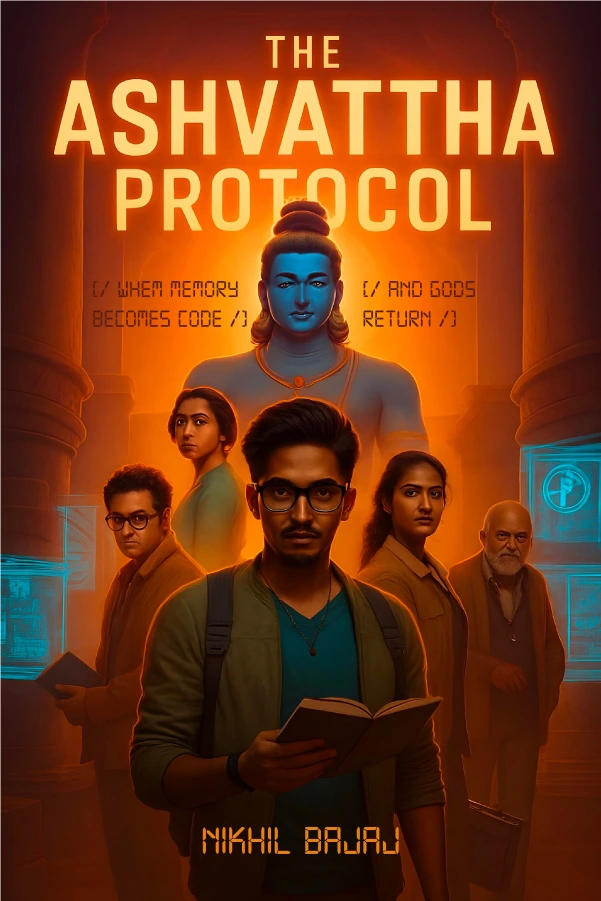
The Ashvattha Protocol
What if science finally cracked the code to life itself?
My first novel, and my love letter to science fiction. It spirals into a world where cutting-edge biotech collides with the oldest human fear — death — and where the ancient quest for immortality stops being myth and becomes policy. Ambition wars with ethics on every page.
-
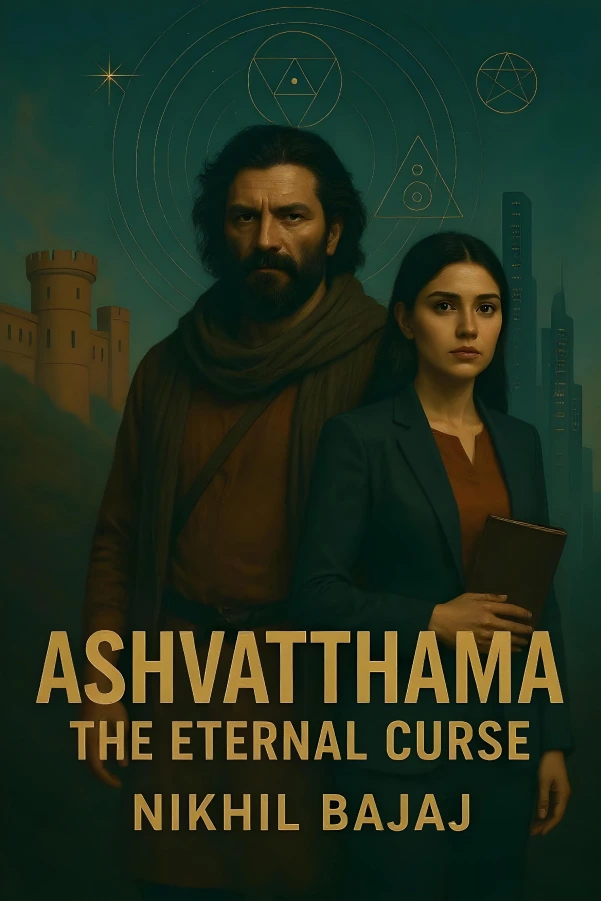
Ashvatthama: The Eternal Curse
What does it mean to endure when endurance itself is the punishment?
A reimagining of one of India's most enigmatic mythological figures — the immortal warrior condemned to walk the earth forever — thrust into a modern world of AI, crime, and destiny. Myth braided with machine logic, curse entangled with code.
-
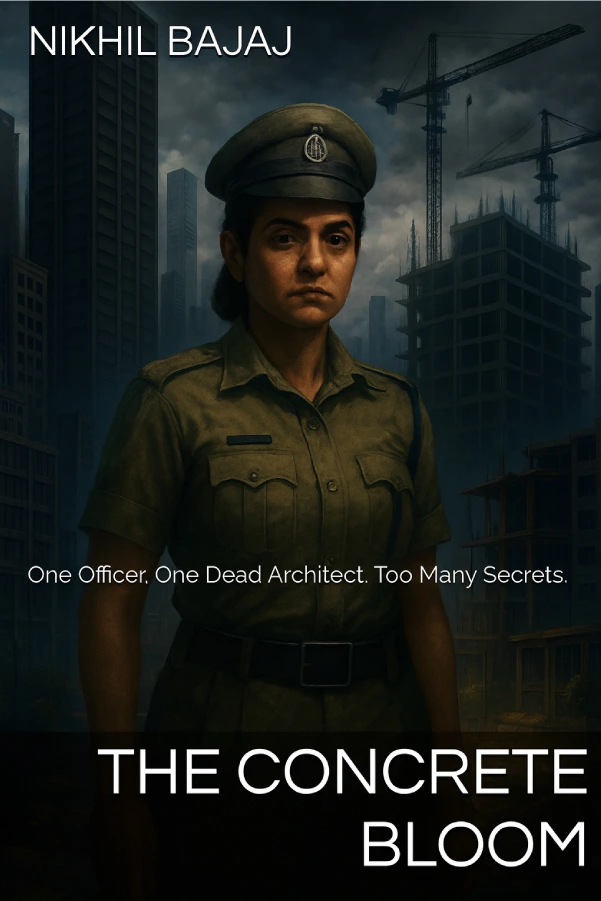
The Concrete Bloom
In a city built on silence, who benefits from the silence?
My dive into crime and noir. One determined officer, one dead architect, and far too many secrets buried in concrete. Sub-Inspector Saloni Talwar pulls a thread through real-estate power, displaced communities, and environmental crimes a contested Gurugram site would rather keep buried.
-
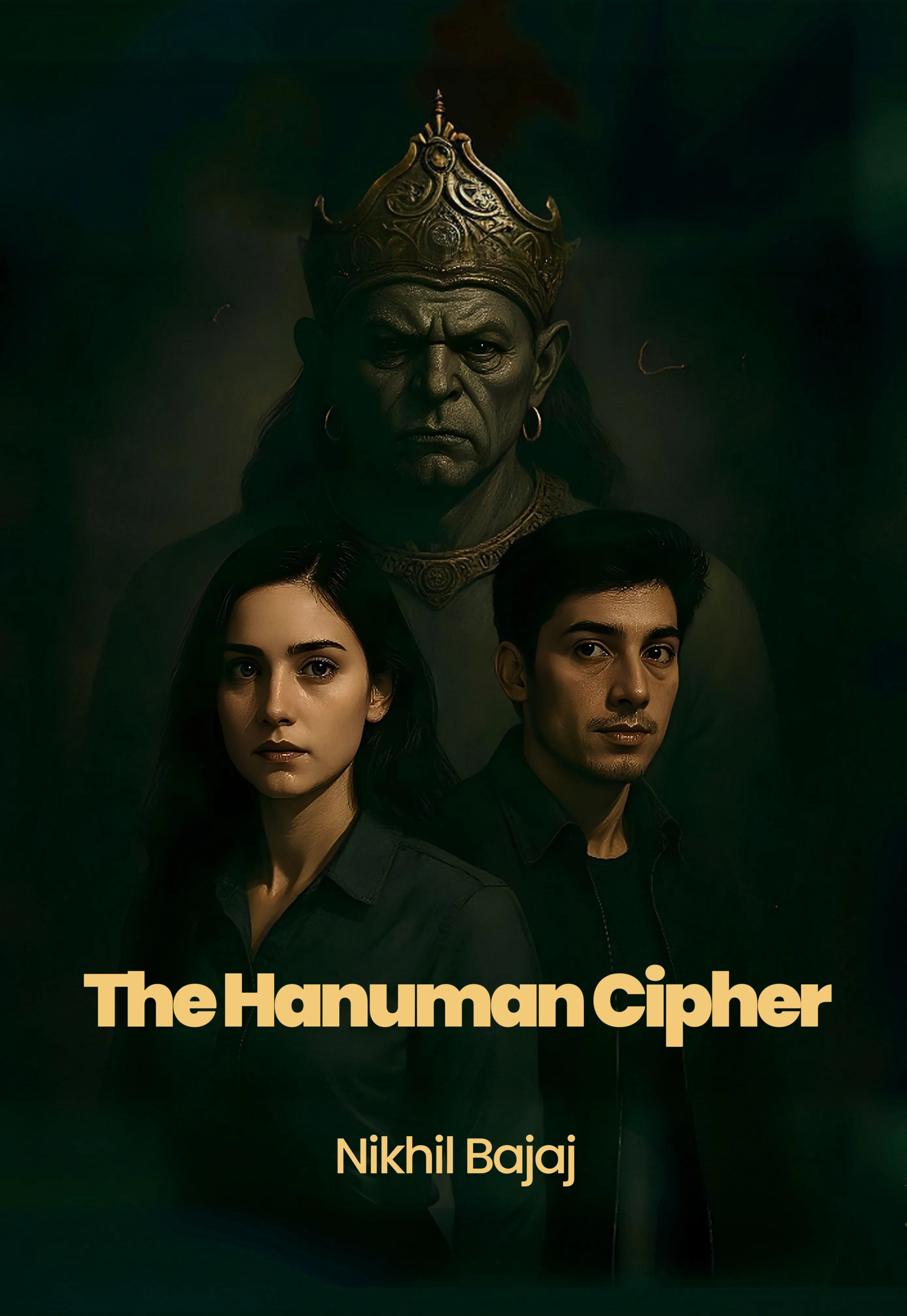
The Hanuman Cipher
What if the gods were the first programmers we ever knew?
At the crossroads of devotion and data. A cryptologist decodes a pattern hidden in hymns and mantras — chants that read less like prayers than algorithms — and awakens something never meant to be found. Myth as memory wrapped in faith.
The Evolution of a Storyteller
I’ve been five different readers of the same shelf.
- 01
The Reader
For years a book was a place to disappear into, nothing more. I read to be somewhere else, and I assumed that’s all reading was for. I planned to be a reader forever and never thought past it.
- 02
The Observer
Then I started noticing the machinery — why one chapter landed and another went slack, where a writer earned a turn and where they cheated it. The spell broke a little, and underneath it was a craft.
- 03
The Collector
I began hoarding fragments instead of finishing stories — a line, a what-if, a contradiction that wouldn’t sit still. Notebooks filled with questions I had no intention of answering. I was gathering raw material for years before I admitted what it was for.
- 04
The Writer
At some point the fragments got too loud to leave on the page, and I chased one all the way down. The first novel taught me the difference between having an idea and being responsible for it. A draft is where you find out what you actually think.
- 05
The World Builder
Now I don’t write a book; I build a world and let the books happen inside it. Characters cross between them, a curse in one is a rumor in another, and the questions thread through all of it. I think in arcs now — which, I’ve noticed, is also how I run a team.
What Writing Taught Me About Leadership
The Novelist and the Engineer are the same person.
-
Every system needs a narrative.
A roadmap is a spreadsheet; nobody defends a spreadsheet when it’s inconvenient. People defend a story. Fiction taught me that humans act on the narrative the data is wrapped in, so I spend as much time on why we’re building this as on what — a team that can’t see the plot just executes instructions until the first hard week.
-
Incentives write the character.
In a novel nobody acts without a reason that makes sense from inside their own head — the villain is the hero of his own chapter. Teams are the same. When someone keeps making a choice I don’t like, the answer is almost never that they’re careless; it’s that the incentive in front of them rewards exactly what they’re doing. Change the incentive, not the person.
-
Trust is the slowest thing to build and the fastest to lose.
A reader gives you their attention on credit and revokes it the moment you cheat them. People extend trust the same way — in small, reversible amounts — and pull it back fast when a date slips quietly or a promise gets edited after the fact. You earn it back the slow way, on the page and in the org: by being predictable when it would be easier to be impressive.
-
Good architecture and good stories both pay off late.
The decision you make in chapter two is what makes chapter twenty land. Systems are the same; the unglamorous call you make early is what holds when the load arrives. Both crafts reward the person willing to do invisible work now for a payoff nobody can see yet.
Off the clock
Three lives, one restless curiosity.
Away from the org chart and the manuscript, the same person keeps turning up in very different rooms.
-

The reader & author
I planned to be a reader forever — until the voices got loud enough to publish. Four novels later, I still get lost in bookshops and stack them higher than I can carry.
-

The father
My daughter asks sharper “what if” questions than I do — and keeps me honest about what actually matters the moment the laptop closes.
-
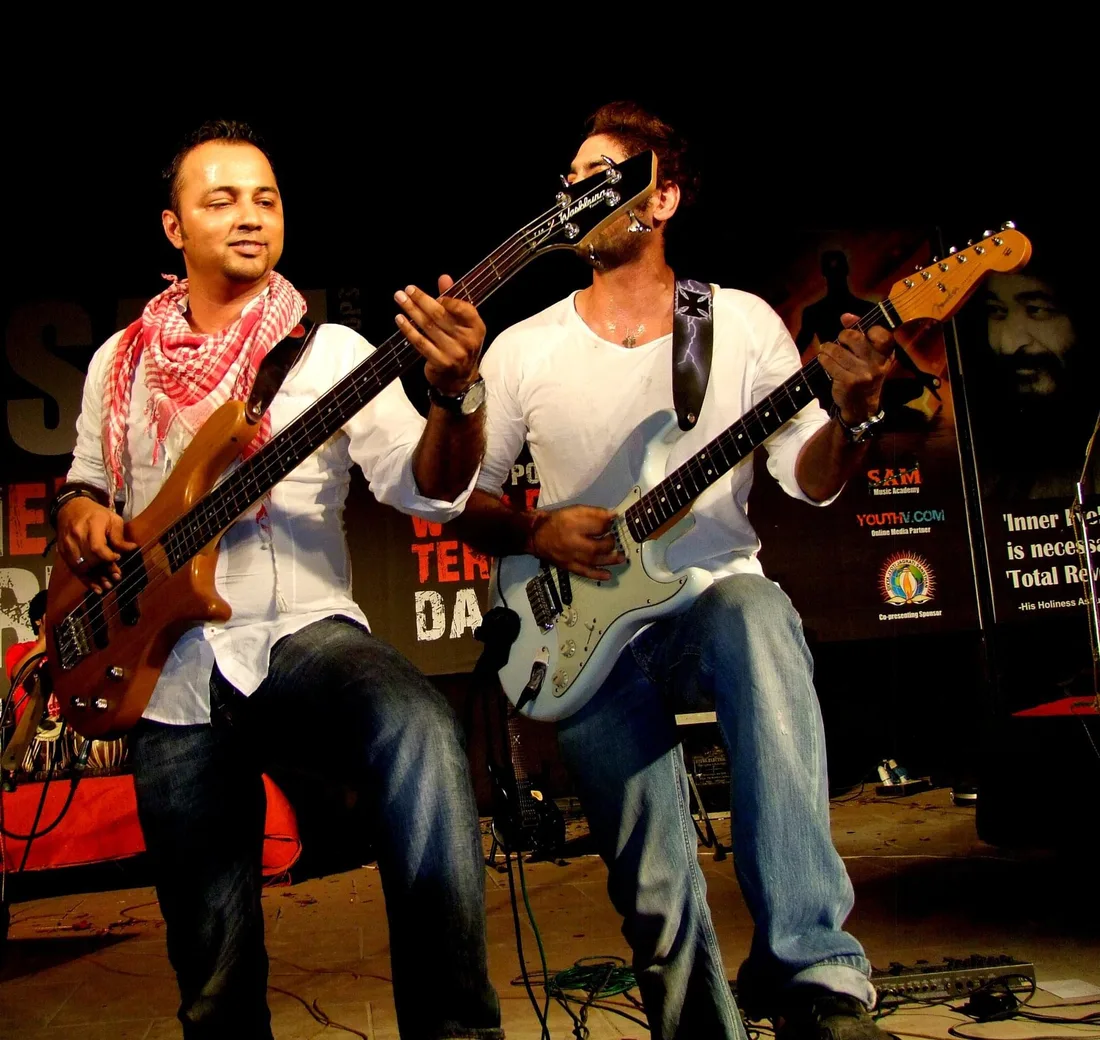
The musician
In another life I played bass in touring bands — the loud years, before any of the runbooks. I still pick it up when the house goes quiet.
The Books That Shaped Me
A map of where my head came from.
Not a reading list — a wiring diagram. These are the works that changed how I think about story, myth, power, and machines.
-
The Mahabharata
Contradiction isn’t a flaw in human nature; it’s the structure. Every character is right and wrong at once, and the book never apologizes for it. Ashvatthama walked out of it and never left my work.
-
The Ramayana
Duty, exile, the price of doing the right thing. It set my instinct that the interesting part is never the victory — it’s what the victory cost.
-
Foundation (Asimov) & Exhalation (Ted Chiang)
Asimov made scale feel inevitable, civilizations as systems you could almost model. Chiang made consequence feel personal. I keep writing in the gap between the two.
-
Dune (Frank Herbert)
Power, ecology, prophecy as a kind of engineering. Where I learned the most dangerous system is the one that’s also a religion.
-
American Gods (Neil Gaiman)
Old gods getting by in a new country on whatever belief they can still gather. It gave me permission to put myth on a modern street and not explain the seam.
-
Thinking in Systems (Donella Meadows)
This one rewired me for good. Once you can see feedback loops and load-bearing assumptions, you can’t unsee them — in a codebase, an org, a city, a plot.
-
Sacred Games (Vikram Chandra)
A city reveals exactly what it optimizes for. I wrote a whole crime series chasing that same honesty.
Off the page
Stories, systems, or both?
The worlds I build at night and the ones I run by day are the same craft. If any of it resonates, I’d love to talk.