
Case study
Migrating a global law firm’s document system without a minute of downtime
A multi-year document-management migration that moved millions of legal documents across ten international offices for a heavily regulated global law firm — with zero operational downtime, full chain-of-custody, and 100% audit and governance compliance.
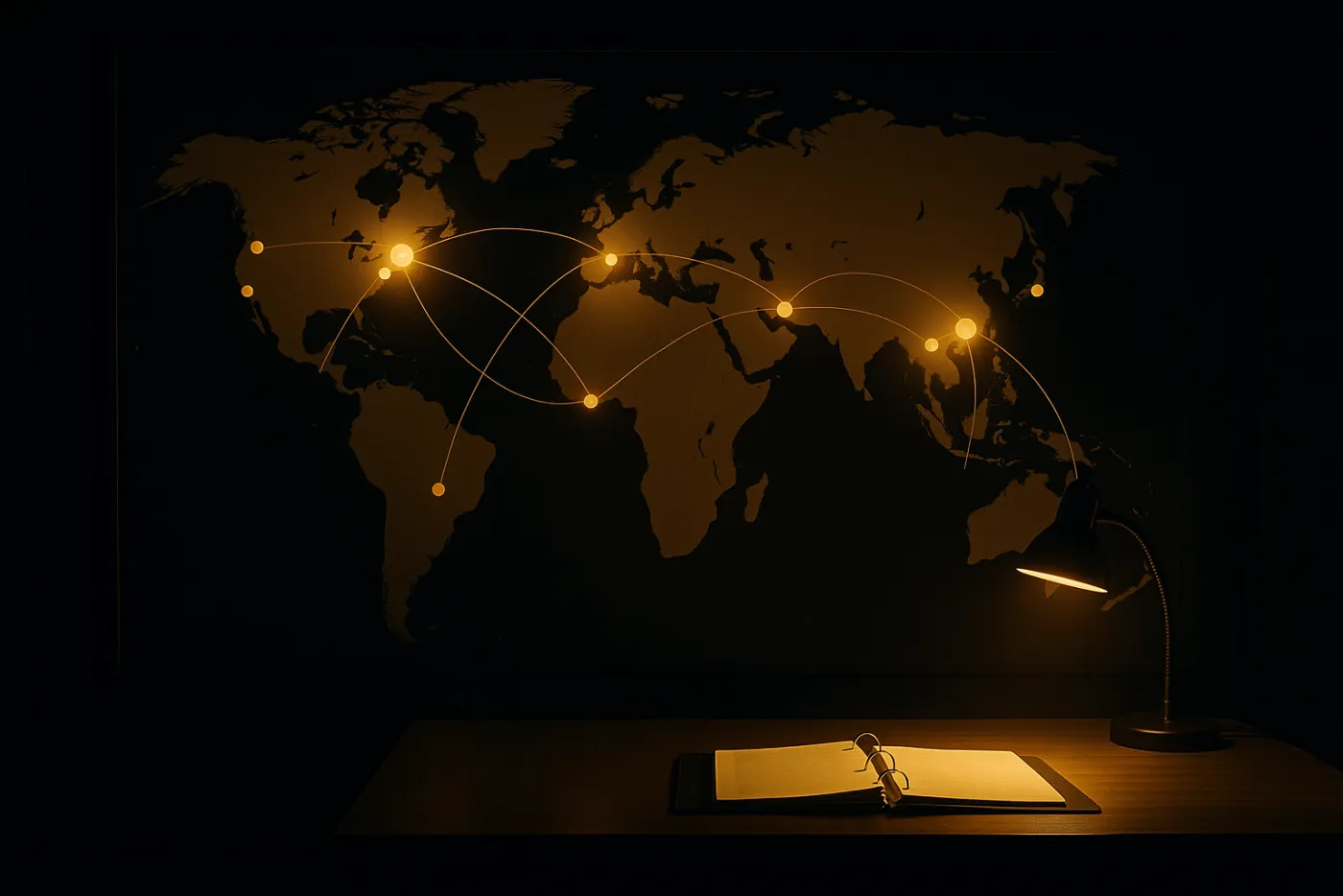
- 10International offices · four time zones
- ZEROMinutes of operational downtime
- £5MProgram value at peak
- 100%Audit & governance compliance
- ~6.2MDocuments cut over with full lineage
- 38Office-level cutover rehearsals
The challenge
What I walked into.
- A global law firm does not get to pause. Fee earners in one office draft at deadline while another office sleeps; a document system unavailable for an hour is billable work, client commitments, and court filings that don’t happen. The migration had to be invisible to the people doing the work.
- The estate was not clean. A decade-plus of matters, precedents, and email had accumulated across ten offices on a legacy platform, with local naming conventions and inconsistent metadata that had to survive the move intact — nothing orphaned, nothing reattributed to the wrong matter.
- Regulation left no margin. Under legal professional privilege, confidentiality rules, and information-barrier (ethical wall) obligations across jurisdictions, every document had to keep its access controls, retention rules, and chain of custody through cutover. A privilege break was not a defect — it was a reportable event.
- Ten offices meant ten overlapping working days. There was no single quiet window; any cutover that took a fixed system down globally would land in the middle of someone’s business hours.
- Rollback could not be theoretical. With privileged client data in motion, “we think we can revert” was unacceptable. We needed a tested, timed, rehearsed path back to the last known-good state for every office, signed off before anyone touched production.
The approach
I treated this as a reliability program, not a data-move project. The premise: assume any single cutover could fail, and make failure survivable everywhere before allowing it anywhere. We sequenced the ten offices into waves by region and risk, starting with a lower-volume office as the reference cutover and ending with the highest-complexity London estate once the playbook had earned trust. Each office got its own rehearsal cycle against a production-shaped staging copy — full-volume data, real metadata, real access controls — run until the cutover was routine. We rehearsed 38 times, and rehearsal is where we found the expensive problems cheaply: a metadata-mapping edge case that would have mis-filed a class of matters, a permissions-inheritance gap that would have widened access, a retention rule that rounded the wrong way. Each cutover ran inside the office’s own overnight window, in its own local time — no global blackout, ever. Every wave had a written runbook with a named go/no-go gate, a pre-staged rollback timed to fit the same window, and source-to-target reconciliation before we declared an office live. Governance sat in the room for each gate with the evidence in front of them, so compliance was a live control during the migration, not an audit performed on it afterward.
The systems
How I built it.
Rehearsal against a production-shaped copy
Every office cutover was rehearsed end-to-end on a full-volume staging environment mirroring real data, metadata, and access controls — not a sampled subset. We ran each rehearsal until the cutover was uneventful, which is exactly when it found the edge cases that mattered. The first time anything ran in production, it was the Nth time the team had run it.
Rollback discipline as a precondition
No cutover was authorized until its rollback was written, timed, and proven to fit inside the same overnight window as the migration. We snapshotted last-known-good per office, kept the legacy platform readable until reconciliation passed, and defined the explicit triggers — reconciliation mismatch, access-control drift, privilege-integrity failure — that would call the revert. Rollback was a rehearsed step, not a hope.
Time-zone-sequenced cutover waves
Offices were grouped into regional waves and cut over inside their own local overnight windows, so no single change took the global system down during anyone’s working day. Sequencing ran lowest-risk office first as the reference cutover and highest-complexity estate last, so the written cutover plan accumulated trust before it met the hardest data.
Governance in the room, evidence-gated
Risk, compliance, records management, and IT steering had a standing seat at every go/no-go gate, reviewing source-to-target reconciliation — document counts, metadata fidelity, access-control and ethical-wall integrity, retention mapping — before an office was declared live. The controls ran during the migration, which is how the program held 100% audit and governance compliance across all ten offices.
The outcomes
Measured.
What it taught me
- When the system cannot pause, you don’t schedule downtime — you engineer it out. Time-zone sequencing turned a global blackout into ten quiet local windows nobody noticed.
- Rehearsal is the cheapest place to fail. Every problem found on a production-shaped staging copy was a problem we did not find live, in front of privileged client data, at the worst possible hour.
- Rollback is a precondition, not a contingency. If the revert isn’t written, timed, and proven to fit the window, the cutover is not ready — regardless of how confident the team feels.
- In a regulated environment, governance belongs in the room with the evidence, not in a memo afterward.
- Sequence by trust. Run the lowest-risk office first so the playbook earns credibility before it meets the hardest estate.
- Chain of custody is the real deliverable. Moving the documents is easy; moving them with access controls, retention, and privilege intact across jurisdictions is the entire job.